Not every part we make is a repair. Some come from a drawing and a pile of steel. This page covers the fabricated side: the strainers and tanks in our gallery and the metal and plastic chutes we make for cement and mining.
At a glance
- Conical perforated strainers seam-welded to ring flanges
- Basket strainers with hoops, spider bars and lift bars
- A custom steel tank with a domed head and nozzles
- Metal and plastic chutes for cement and mining
I have used Wolf Machine several times over the past few years for fabricating and repair of parts on my ultralight aircraft. [...] These guys are great to deal with. I wouldn't take my projects anywhere else.
What the gallery shows
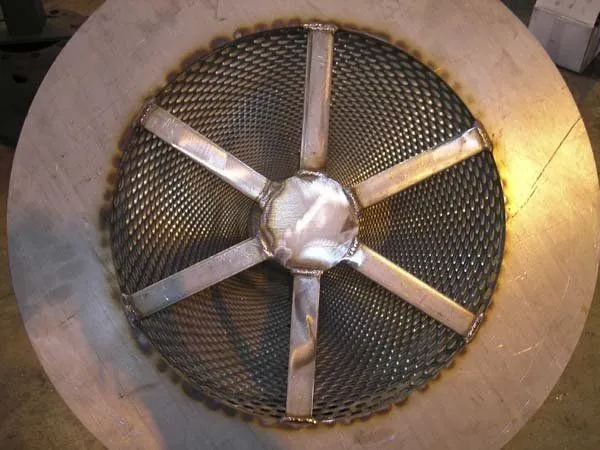
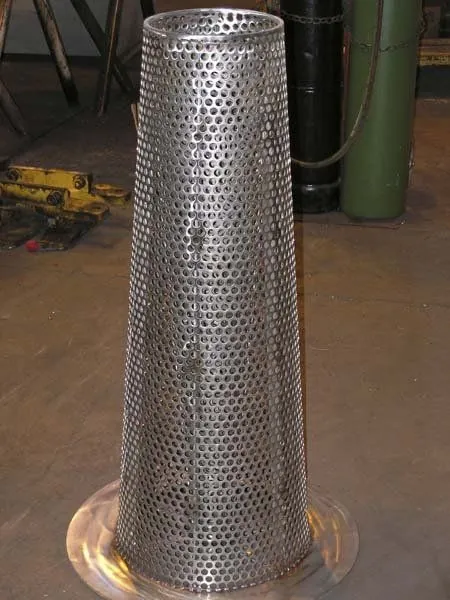
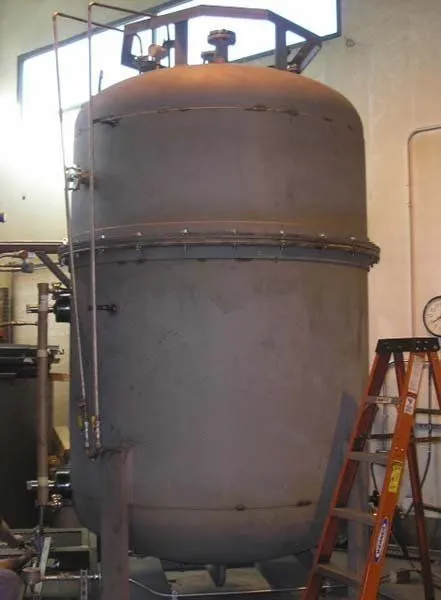
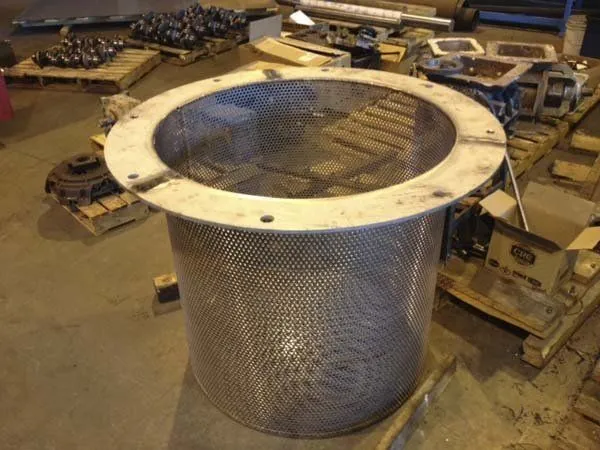
Several strainer photos in our gallery show the same family of parts at different stages. One is a cone of perforated plate welded along its seam to a flat ring flange. Another is a basket with flat-bar hoops around the outside and spider bars across the inside to hold its shape, plus a lift bar and a bolted flange. A custom steel tank has a domed head, a bolted flange partway down its body and nozzles on the side.
How a strainer comes together
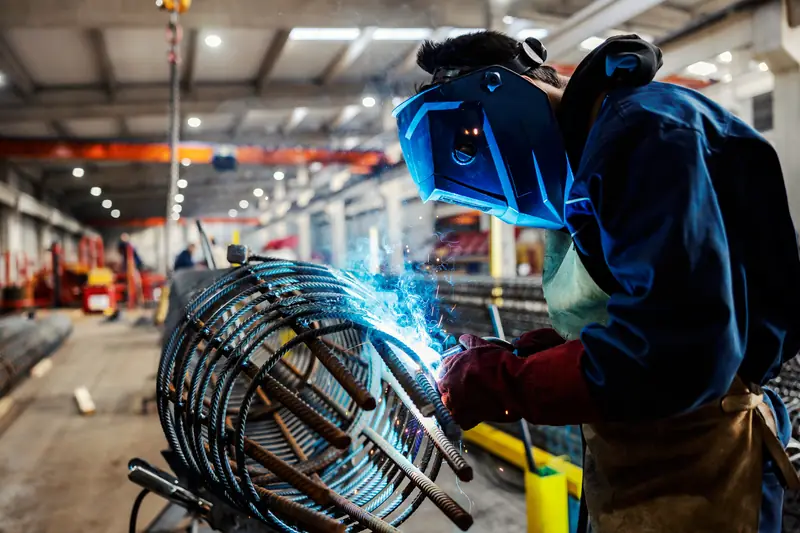
Perforated sheet is made into a cone or cylinder and welded along the seam. The open edge is welded to a ring flange that bolts to the line. Hoops and bars stiffen the shape so the basket does not collapse when it loads with debris. The metal fabrication page covers the cutting, fitting and welding behind it, and welding of all types covers the joints.
Chutes and plant parts
Chutes guide material from one point to the next in cement and mining plants. Our list includes metal and plastic chutes for those industries.
Send us the job
A drawing is best. Without one, send a sketch with the diameters, the flange pattern and the hole size and pattern of the perforation, or the old strainer. Attach it to the quote request or call (775) 359-5570. Related industries: cement and aggregates.
Sources
- Wolf Machine & Fabrication services list (2026-10-18)