
Cast iron welding repair
Many cracked cast iron parts can be repaired by welding, and we look at each one first to decide whether welding makes sense. Cast iron is brittle and cracks easily when heated and cooled unevenly, so the repair depends on locating the whole crack and controlling the heat.
- Built from your specifications, drawings or samples
- Free consultations, prompt estimates
- Wolf Machine stands behind the work we perform
- Reno shop, Monday to Friday, 7:00 am to 3:30 pm
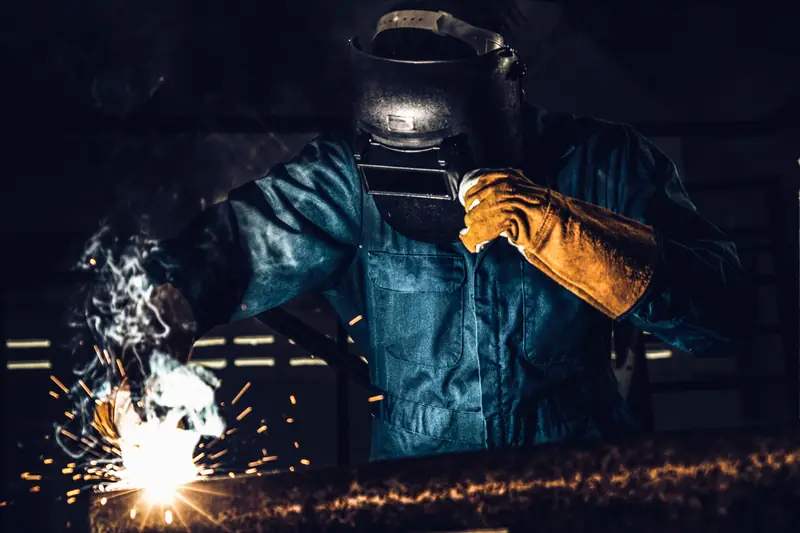
Stock photo: arc welding with a stick electrode, sparks in a dark shop
Gear cases, pump bodies, housings and brackets are often cast iron, and they fail by cracking. Welding cast iron is a skill of its own because the metal behaves nothing like steel when it is heated. This page is about that repair. For the joint on steel parts, see the general welding page.
At a glance
- Cracks found first with Magnaflux
- Preheat and slow cooling to protect the casting
- Filler chosen for cast iron, often nickel based
- Honest advice on whether to repair or replace
- Machining after the weld, in the same shop
Love working with these guys, and gal. Great customer service and knowledgeable skill base. They have helped with many big projects and have always pulled though when our machines went down.
Why cast iron cracks when it is welded
Cast iron holds a lot of carbon, much of it as flakes of graphite. That makes it good for vibration damping and wear, and it also makes it brittle. A weld heats a small spot to melting while the metal around it stays cool, and cast iron cannot stretch to absorb that difference. The result is a new crack beside the weld.
Fast cooling makes it worse. Carbon in the heated zone can form hard, brittle structures that crack as they cool, which is why the heat-affected zone matters so much on castings.
Find the whole crack before you weld
Cast iron is magnetic, so Magnaflux crack inspection works well on it. Magnetic particles gather along a crack and show where it ends. A weld that stops short of the crack tip leaves the crack free to grow.
Once the crack is mapped, it is opened up with a groove so the weld can reach the bottom. Drilling a small hole at each crack tip is a common general practice to stop it running further.
Preheat, slow cooling and filler
The usual approach on a casting is to warm the whole part evenly before welding, keep it warm during the work and let it cool slowly, often under insulation. This is the idea behind preheat and interpass temperature. Short weld passes, peened lightly, also relieve stress.
Filler for cast iron is often nickel based, because it stays soft enough to take the stress. Which approach fits depends on the casting, the crack and the job the part does.
Repair or replace: we look at it first
Some castings are better replaced, such as a part with many cracks, oil-soaked metal that will not accept a weld or a crack in a place that carries heavy load. We would rather tell you that after a look than weld a part that will fail again. The guide on repair or replace sets out how to decide.
Send photos of the crack from two sides, the machine the part came from and what the part does. If it is a housing that must be bored or faced after welding, mention that too, because it changes how much stock is left on.
Sources
- Cast iron (welding section) (2026-10-18)
- Magnetic particle inspection (overview) (2026-10-18)
Cast iron repairs
- Gear cases and gearbox housings
- Pump bodies and casings
- Half carriers and other equipment housings
- Brackets, bosses and mounting feet
- Machine bases and covers with cracks
Typical parts
- Gear cases
- Pump bodies
- Housings
- Brackets
- Half carriers
How to send us the job
Start with whatever you have: the drawing, the old part, or clear photos and a few measurements. Attach files to the quote request or bring the piece to 4812 Longley Ln.
Related
Questions about this service
From the shop
Work from the shop
Metal and plastic fabrication
Related services
Straight answers
Cast iron welding repair questions
Still have a question? Call (775) 359-5570, Monday to Friday, 7:00 am to 3:30 pm.
Can any cracked cast iron part be welded?
Not every one. We look at the part first, locate the crack and judge whether a repair will hold. If replacing is the better choice, we say so.
Do you preheat cast iron?
Yes, preheat and slow cooling are standard practice on castings because uneven heat is what makes cast iron crack.
Send us the job
Request a quote
Tell us what you need, attach a drawing or photos of the part, and we will get back to you during shop hours. Free consultations; prompt estimates.
- From your specifications, drawings or samples. We can also assist you in designing your product or part.
- Free consultations and prompt estimates
- Stands behind the work: Our rates are very competitive and our quality is second-to-none. Wolf Machine stands behind the work we perform.
- Company accounts: all major credit cards, or we can open an account for your company
Shop hours Monday to Friday, 7:00 am to 3:30 pm. Send your request any time and we will get back to you during shop hours.
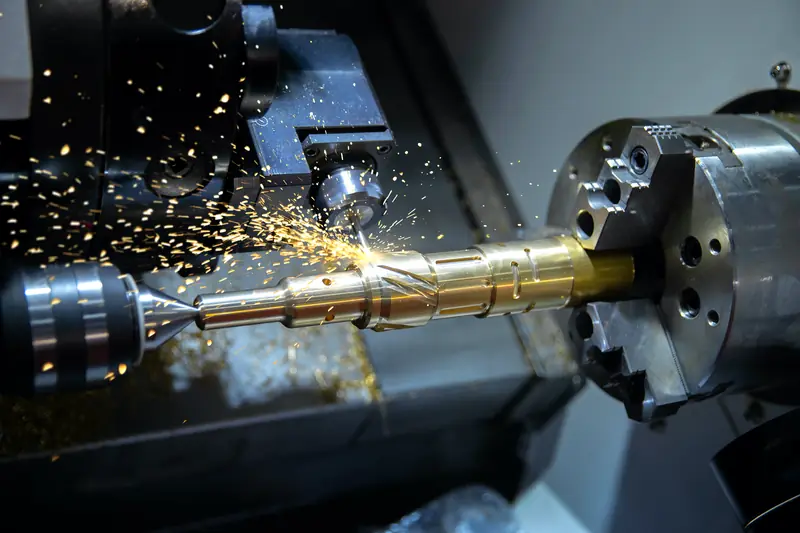
Stock photo: a lathe turning a bar, hot chips flying