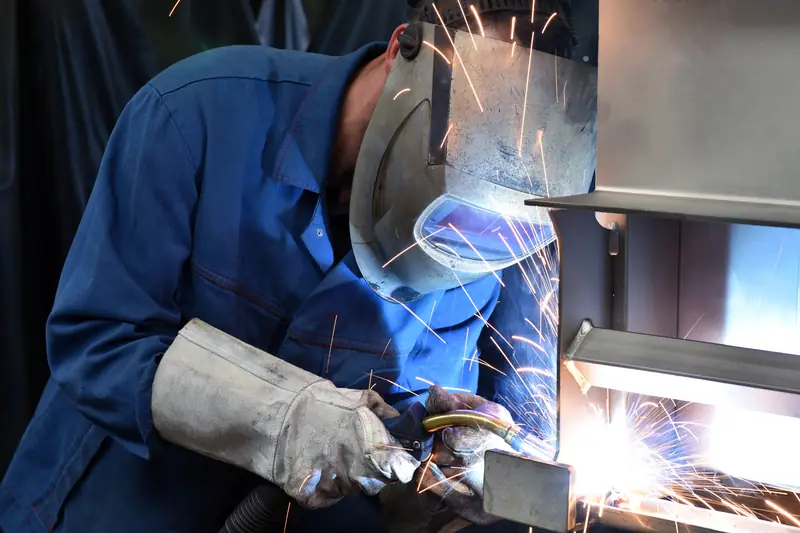
A cold, thick part pulls heat out of a weld very quickly. Warming it first lets the weld cool more slowly and gently, which matters for metals that turn hard and brittle when they cool fast.
Why parts are warmed
Thick sections, cast iron and steels with more carbon or alloy are the usual candidates. A fast-cooling weld in those metals can make a hard, brittle structure in the heat-affected zone, and shrinkage stress can pull it apart. Warming the whole area evenly lowers the temperature difference and gives trapped hydrogen time to escape.
The amount of preheat depends on the metal, the thickness and the job. It is set by the welding plan or the base metal rather than by guess. Cast iron is warmed all over, not just at the crack, because a hot spot in a cold casting sets up the same stress the preheat is meant to prevent. Heavy steel sections are warmed for a different reason: they are so large that they would otherwise carry the heat away from the weld before it could spread.
Interpass and slow cooling
Interpass temperature is the temperature of the weld area right before the next pass. A minimum keeps the part from cooling too far between passes, while a maximum prevents too much heat from softening steel or damaging stainless. After the last pass, a casting is often wrapped in insulation so it cools slowly and evenly, sometimes for hours. Opening it too early is a common way to crack a good weld.
On a cracked casting the whole procedure matters. See the page on cast iron welding repair for how it is used.
Sources
- Heat-affected zone (overview) (2026-10-18)
- Cast iron (welding section) (2026-10-18)