4812 Longley Ln, Reno, NV 89502Mon-Fri 7:00 am - 3:30 pmMon-Fri 7:00 am - 3:30 pm(775) 359-5570
Wolf Machine & Fabrication, Inc.

Runout (TIR)

Runout is how much a round surface moves from side to side, or in and out, as the part turns on its axis. It is measured as total indicator reading, or TIR, which is the full swing of a dial indicator needle during one turn.

Have a drawing, a sample or a broken part? Call (775) 359-5570 or request a quote and attach your drawing or photos.

  • Built from your specifications, drawings or samples
  • Free consultations, prompt estimates
  • Wolf Machine stands behind the work we perform
  • Reno shop, Monday to Friday, 7:00 am to 3:30 pm

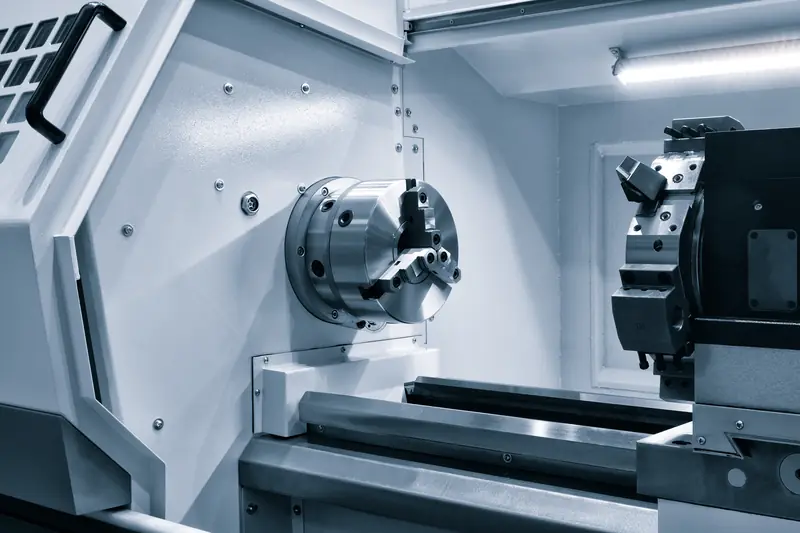
Stock photo: the chuck and turret of a CNC lathe

A shaft can have exactly the right diameter and still wobble. Runout is the number that catches it. On rollers, pulleys, shafts and motor rotors a small wobble becomes vibration, uneven wear and early bearing failure.

How runout is checked

The part is supported on its bearing journals, between centers or in vee blocks. A dial indicator is set with its tip touching the surface, and the part is turned slowly by hand. The needle moves as the surface passes under it. The total movement from the lowest reading to the highest is the TIR.

The reading is the combined effect of out-of-round and an off-center axis, so it is a practical check rather than a pure measurement of either one. Where a drawing needs finer control it uses GD&T symbols to name the datums the part must turn about.

Radial and axial runout

Radial runout is measured with the indicator tip pushing straight in on the outside diameter or inside diameter, and it shows how far the surface wobbles across the axis. Axial runout, sometimes called face runout, is measured with the tip on a flat face, and it shows how far the face moves along the axis as the part turns.

A pulley face or a flange that runs out axially will not seat flat against its mate, and a shaft that runs out radially will load its bearings unevenly. Both are checked from the same datum, usually the bearing journals or the bore.

Why it matters on rollers, pulleys and shafts

Anything that turns at speed is sensitive to runout. A print roller with an off-center face marks the paper, a conveyor pulley with a wobble tracks the belt to one side, and a motor shaft with a bend shortens the life of the bearings and the seals on it.

When a shaft is built up or turned during a repair, the finished journals have to turn true to the ones that were not touched, so the part is set up and checked from the original bearing surfaces. If your print calls out a runout value, send the full drawing with the quote request, and put the callout in the note if the part is a sample with no print. The tolerance entry covers how limits like this are written.

Sources

Talk to the shop

(775) 359-5570

Monday to Friday7:00 am - 3:30 pm
Saturday and SundayClosed
Request a quote

In context

Where you will see it on this site

Geothermal power Printing Rollers and shafts

Send us the job

Request a quote

Tell us what you need, attach a drawing or photos of the part, and we will get back to you during shop hours. Free consultations; prompt estimates.

Call (775) 359-5570

  • From your specifications, drawings or samples. We can also assist you in designing your product or part.
  • Free consultations and prompt estimates
  • Stands behind the work: Our rates are very competitive and our quality is second-to-none. Wolf Machine stands behind the work we perform.
  • Company accounts: all major credit cards, or we can open an account for your company

Shop hours Monday to Friday, 7:00 am to 3:30 pm. Send your request any time and we will get back to you during shop hours.

Your quote request

Three short steps. Attach a drawing or photos if you have them; only your name and a phone or email are required.

Step 1 of 3: What you need
This request is for
Step 2 of 3: Drawings or photos

Attach drawings or photos (optional)

Up to 5 files, 12 MB in total. A photo of the part with a tape measure in the shot is enough to start. Used only to quote your job. Photos are resized before sending; drawings are sent as they are. Larger files: email them to [email protected].

Step 3 of 3: How we reach you

We review requests during shop hours, Monday to Friday, 7:00 am to 3:30 pm, and get back to you with questions or a prompt estimate. Free consultations.

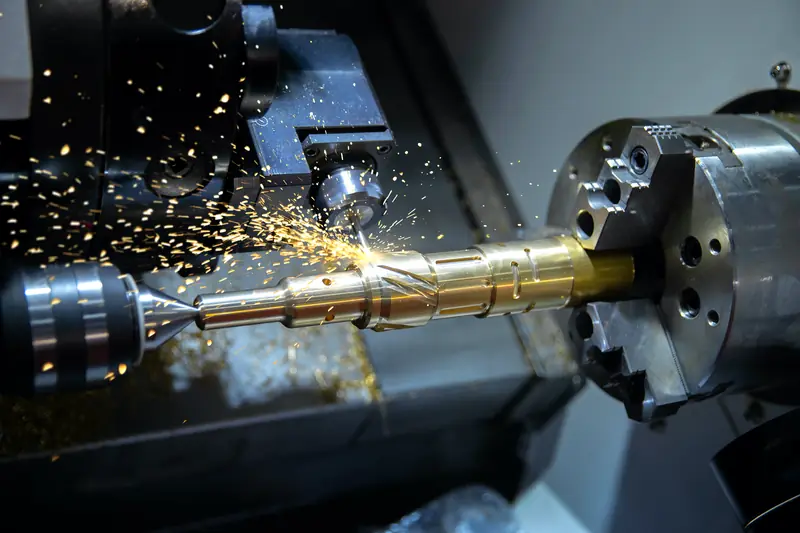
Stock photo: a lathe turning a bar, hot chips flying