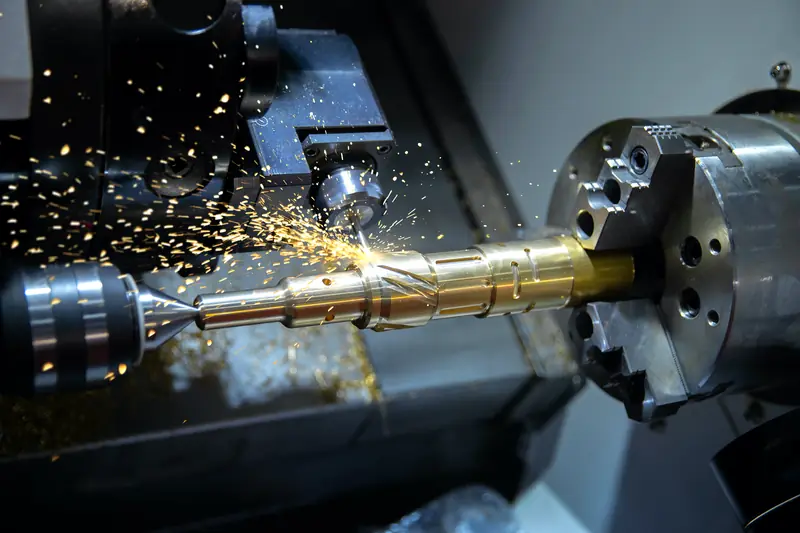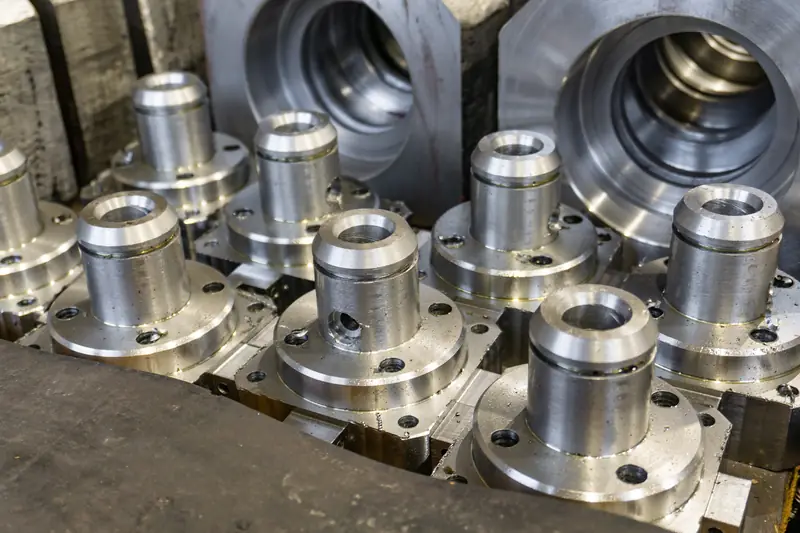
Bearings, bushings, gears and sleeves are held in place this way. There is no key, bolt or glue doing the holding, only the squeeze between the two surfaces, so the sizes on the shaft and in the bore decide whether the joint lasts.
Press fits, shrink fits and clearance fits
In a press fit, the part is forced on with a press, and the amount of squeeze is small enough to do without heat. A shrink fit uses temperature: the outer part is heated so the bore grows, or the inner part is chilled so it shrinks, and the parts slide together and grip as they return to the same temperature.
A clearance fit is the opposite. The hole is larger than the shaft, so a bearing, pin or bushing turns or slides freely. The size difference in either case is a few thousandths of an inch or less, and the limits are written as tolerances on the print, often with a standard fit class.
Bearing seats and bushings
A bearing's inner ring is usually pressed onto the shaft, and its outer ring pressed into the housing, so the seats must be round, true and the right size. A bushing is pressed into a bore and is then often finished to its inside size after it is in.
Because the fit is tight, any damage to the seat shows up quickly. A scored shaft seat, an oval housing bore or a shoulder that is not square will let the bearing sit crooked or turn on its seat.
What happens when a fit wears
When the seat wears undersize, the bearing starts to creep. It turns slowly on the shaft or in the housing, and that wears the seat even faster. This is often called a spun bearing. Signs include heat at the bearing, a discolored or polished seat, a rumble, and fretting dust.
A worn seat is usually built back up and then machined back to size, using metal spray, a sleeve or weld, depending on the load and the metal. The guide to metal spray, sleeve or weld compares the methods. Send the seat sizes and a photo of the worn area with your quote request.
Sources
- Interference fit (overview) (2026-10-18)