Many shops use the two words loosely, and some drawings swap them. What matters is that there are two slots and one key, and that they match in width, depth and position. We key shafts at our Reno shop, and it is a common repair when a drive has been running loose.
Shaft side and hub side
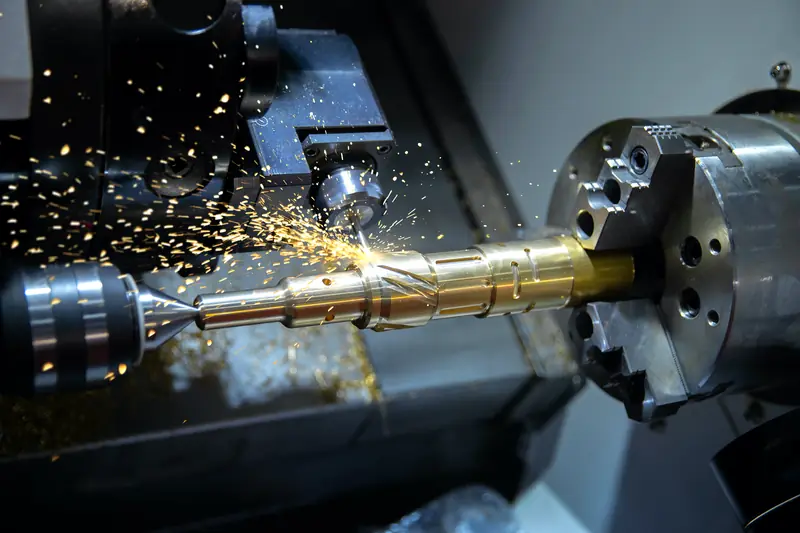
The keyseat in the shaft is cut on a mill or with a keyseat cutter, and it can run out to the end of the shaft or stop short in a closed end. The keyway in the hub is cut by broaching, shaping or a slotting cut after the bore is made.
Square and rectangular keys are the common ones on general drives, and they fit a straight slot with sides parallel to the axis. A Woodruff key is a half-moon shape that sits in a round pocket cut by a small circular cutter, which makes it easy to seat on tapered shafts or smaller drives. Taper keys and set screws are used on some assemblies as well.
What to measure on a worn keyway
A worn keyway usually shows as a slot that has opened wider, with the walls rounded over where the key hammered. Measure the width at the top and the bottom of the slot, the depth from the surface, the length, and how the slot ends. Note whether the slot is on the shaft or in the hub, and which way the load pushes the key.
Also check the bore or shaft diameter around it. A keyway that has failed is often a sign that the fit has loosened as well, and that is a different repair. The interference fit entry explains why.
How a worn keyway is repaired
A slightly wide keyway can sometimes take a larger key, as long as the part is not left too thin. A badly worn slot may be filled by welding and recut to size. The right choice depends on the load and on how much steel is left.
Send the sizes you measured, photos of the worn slot with a scale in the shot, and the make of the drive when you ask for a quote. The work is part of our shafts, threads and keyways service, and the photo guide in How to photograph and measure a broken part shows what to capture.
Sources
- Key (engineering): keyways and keyseats (2026-10-18)