Key takeaways
- Send the original part, even if it is worn or broken.
- Measure the fit areas, which are bearings, seals and threads.
- Choose a material that matches or improves on the original.
- Keep the drawing for the next time.
Equipment lasts longer than the catalogs behind it. A pulley, a bushing or a shaft goes out of production, and the machine sits idle. A machine shop can make the part again, and the work follows the same few steps.
Start with the original
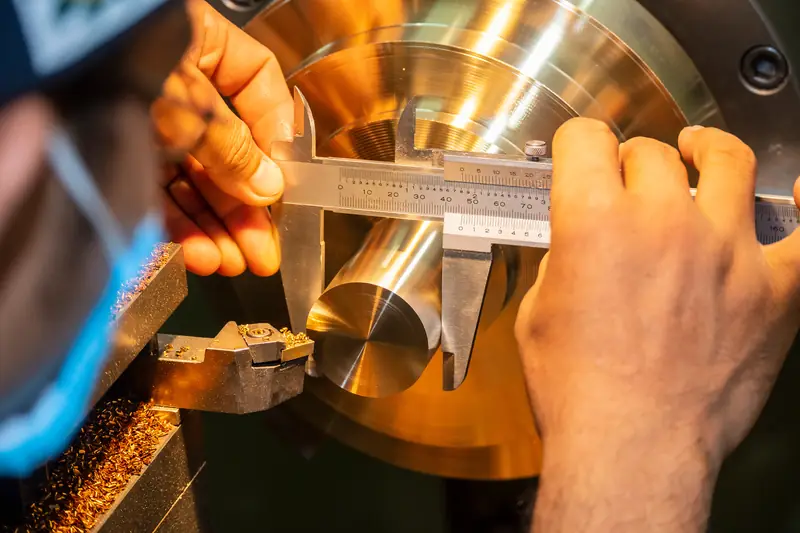
The old part is the most useful drawing there is, even when it is worn. We can measure the places that did not wear, such as the length, the thread, the keyway and the unworn shoulders, and use them to work out the size the worn places used to be. Photos of the machine it came from, the position it sits in and the parts around it fill in the rest. A photo with a ruler or a coin in it gives scale, and a photo of the mating part shows how the new one has to fit. If the part is broken, keep every piece, since the broken faces sometimes show how the part failed and what to change.
If you have a part number or a faded print, send those too. We work from specifications, drawings or samples, and we can assist you in designing the part.
Pick the material and the fit
Match the material if you can find out what it is, such as steel, bronze or stainless. If the original wore or broke early, a better material may be the smart change. The pages on steel and bronze explain common choices.
Fits matter more than any single size. A shaft that meets a bearing, or a bushing in a housing, has to match its mate. For the vocabulary, see the glossary entries on tolerance and interference fit.
Draw it, make one, keep the drawing
Once the sizes are settled, they go on a drawing with the dimensions and tolerances that matter, following the common ASME Y14.5 practice for dimensioning. Then one part is made, checked and fitted. It is the reason prototypes and one-off parts often go together.
The drawing is the valuable result. Write down the material, the sizes that matter and the date, and note the machine the part belongs to. A drawing kept in a binder next to the machine saves the next person a lot of searching. With it, the next part can be made without the old one, and a spare can be ordered before the first one fails. For a deeper look at the process see part design from samples.
How to start
Take photos of the part and the machine from several sides, write down any sizes you have and send them with the quote request, or call (775) 359-5570 Monday to Friday between 7:00 am and 3:30 pm. Free consultations are part of how we work, and we will be happy to provide a prompt estimate.