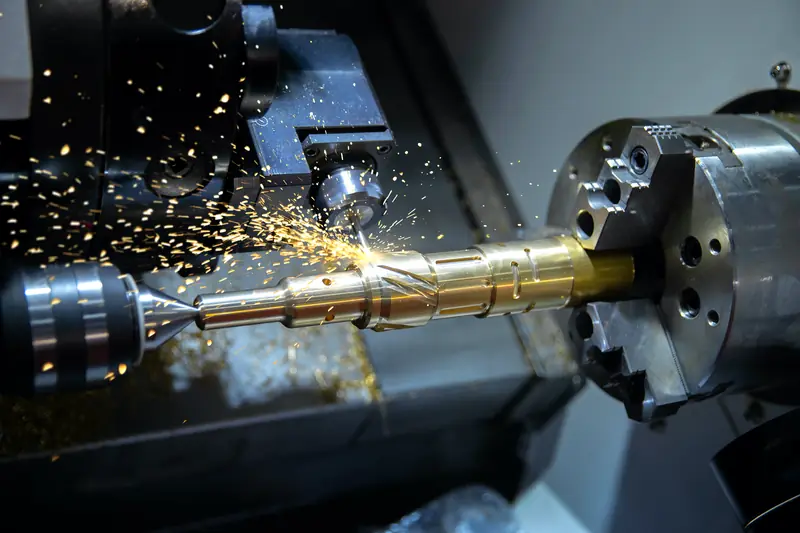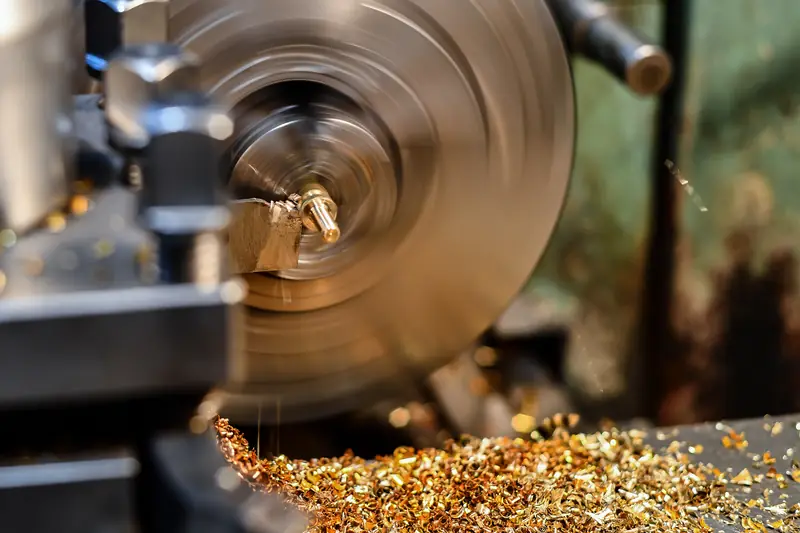
Brass is copper alloyed with zinc, and the zinc is what gives it a bright color and its cutting behavior. Brass parts tend to be small, round and precise, which is why a lathe is usually where they start.
At a glance
- We machine brass at our Reno shop
- Free-machining grades cut fast with short chips
- Fittings, valve parts, bushings and nozzles
- Good for clean, low-load service
- Bronze, which handles bearing duty, has its own page
Love working with these guys, and gal. Great customer service and knowledgeable skill base. They have helped with many big projects and have always pulled though when our machines went down.
Why brass machines so fast
The common free-machining brass, C360, has a small amount of lead in it. The lead makes the chip break into short pieces instead of curling into long ribbons. Short chips clear the tool, leave a smooth finish and let the machine run at high speed. That is why brass is the metal other metals are compared against when machinability is rated.
Brass without lead, such as the alloys used where drinking-water rules apply, cuts less freely. If your drawing or your use calls for a particular alloy, give us the grade.
What brass is used for
Brass resists corrosion, conducts well and does not spark easily. That makes it a normal choice for fittings, valve parts, fasteners, instrument parts and bushings under light loads. It wears well against steel at low pressure but is not the first pick for a heavily loaded bearing.
When the load, speed or heat goes up, the usual step is to move to bronze, which is tougher in bearing service.
What to send
A drawing or a worn sample is a good start. A sample lets us measure threads and diameters directly. Include the quantity, the fluid or environment the part sees and any finish on the sealing surface.
For a single replacement or a short run, use the quote request or call (775) 359-5570. The related page on copper explains the base metal that brass is built on.