
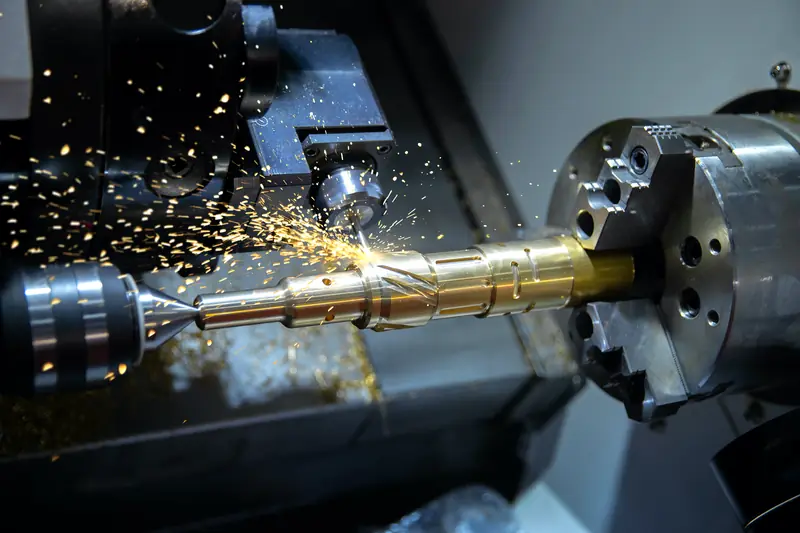
Copper carries electricity and heat better than almost any common metal, which is why parts that move current or take heat away are copper. It is also the base of brass and bronze, so many copper parts are really copper alloys.
At a glance
- We machine copper at our Reno shop
- Bus bars, contacts, terminals and cooling blocks
- Pure copper is soft and gummy to cut
- Burrs and surface finish need attention
- Copper alloys lead to brass and bronze
Love working with these guys, and gal. Great customer service and knowledgeable skill base. They have helped with many big projects and have always pulled though when our machines went down.
What copper is used for
In the industrial plants around Reno, copper turns up where current has to pass or heat has to leave: electrical gear, motors, cooling jackets and process equipment. The part is often a flat bar, a block or a round, drilled and tapped for bolts.
The Copper Development Association groups coppers and copper alloys by number. Several commercial coppers are very pure for conductivity, while alloys trade some of that conductivity for strength and machinability.
How copper cuts
Pure copper is soft and ductile. The chip tends to stretch and stick instead of breaking, and the metal smears on the tool edge. Sharp tools with polished faces, steady feeds and coolant keep the cut clean. Alloys with a little tellurium or lead are sold as free-machining coppers, and they cut more like brass.
Burrs are the second watch point. Soft metal rolls over at the edge of a hole or slot, so a bus bar often needs deburring and a clean edge to make a flat, tight electrical joint.
What to tell us
Give the copper type if it is on the drawing, along with the quantity and any finish or flatness needs on the contact faces.
A sample works too. If the part is a brass or bronze alloy rather than pure copper, the pages on brass and bronze cover those. Send the quote request or call (775) 359-5570.